






If I Wanted to Break 90, I'd Only Use These 5 Clubs: driver, one hybrid, a 7- or 8-iron, a 56° sand wedge, and a mallet putter. That's it. Breaking 90 doesn't need a 14-club arsenal; it needs 3 to 5 greens, 6 to 8 fairways, 32ish putts, and fewer than four doubles. Guys who break 90 average just 0.8 doubles a round. The clubs you're cutting are the ones tempting you into water and trees. Here's exactly how each club earns its spot.
What Breaking 90 Takes on a Par-72 Course
If you're chasing 89 on a par-72 course, you're really chasing bogey golf with a couple of holes to spare. That's 18 over. Not exactly heroic. Yet only about 26% of golfers do it regularly, even though roughly 55% have pulled it off once.
But here is the good news, you just ou need 3-5 greens in regulation. Six to eight fairways out of 14. Thirty-two to 34 putts. Four or fewer doubles, ideally one or two. Three-putts capped at three. Penalty strokes at zero to two. And you need 13 or more GIRp1s, meaning holes where you reach the putting surface in one shot more than regulation.
Notice what's missing? Birdies. Distance. Any of it.
Strokes gained tells the same story: you go from about -18.0 to -14.5, with approach play carrying the biggest load, moving from -9.0 to -7.0. Small gains everywhere. No blow-up holes. That tracks with where shots actually occur, since roughly 60% of shots happen within 100 yards.
Your Five-Club Break-90 Bag, Club by Club
The five-club bag that gets you to 89 isn't mysterious: driver, one hybrid, one mid-iron, a sand wedge, and your putter. That's it.
Driver stays because tee distance keeps par-5s and long par-4s reachable, so you're not attempting hero shots from 210 out. Just hit the one that goes straight, not the one that goes farthest.
The hybrid replaces your 3- and 4-iron. Those clubs have humiliated mid-handicappers for decades. A hybrid launches higher and forgives more. Keep it.
One mid-iron handles your full-swing approaches. One PGA coach recommends an 8-iron, with a 7-iron as a fine swap. Pick the one you strike predictably.
A 56° sand wedge covers chips, pitches inside 80 yards, and bunkers. In a full 14-club bag you'd want a minimum of three wedges, since 90-shooters hit only five to eight greens in regulation and spend the rest of the round scrambling from 80 to 130 yards.
Then the putter. Two-putt golf, every hole. Three-putts erase everything. Make it a mallet if you can, because the significantly longer alignment lines show you your true aim, where a blade's short lines can hide a 1° error and make crooked aim look perfect.

The Yardage Gaps Five Clubs Must Cover
Every club in that bag needs its own yardage window, and here's the number that matters: 10 to 15 yards between full swings. Twelve yards is the sweet spot. Roughly four degrees of loft gets you there.
Go tighter and your clubs step on each other. Go wider, and you're stuck hitting awkward three-quarter shots, which is exactly how you make double bogey.
Unfortunately, most people screw this up: they check total distance instead of carry. Roll doesn't help you over a bunker. Get your actual carry numbers. And remember those numbers move with the calendar a club that carries 150 yards in July may only reach 140 in January, when dense cold air and soft ground strip away both carry and roll.
The scoring zone matters most. Most of your approaches land inside 80 to 120 yards, so your pitching wedge (100–130), gap wedge (90–110), and sand wedge (80–100) need clear separation, not a mushy overlap. For reference, PGA Tour players average 140 yards with a pitching wedge, 125 with a gap wedge, and 110 with a sand wedge, proof that even the best players build their wedges around consistent 15-yard steps.
Break 90 by Erasing the Double Bogey
Do the math, and it gets uncomfortable fast. Par 72 gives you 18 bogeys for a 90, so you get maybe four doubles and only if everything else is clean. Golfers who break 90 average 0.8 doubles a round. The 90-95 crowd? 2.3. That's the whole gap.
Doubles come from the same three places: penalty strokes, chunked chips around the green, and three-putts. Not bad swings. Bad decisions. Turning just two of those doubles into bogeys saves you the same two strokes as tripling your birdie count, and it's a whole lot more repeatable.
So stop hitting driver into water. Hit the hybrid. When you're in the trees, punch out sideways if you can't pull a shot off eight times out of ten, don't try it. Aim at the fat side of the green, then lag your first putt to a three-foot circle. Take the bogey early. It's not a failure; it's just math.
The Break-90 Stats to Track Every Round
You can't fix what you don't measure, and most golfers stuck in the 90s have no idea where their strokes actually go. So track six numbers. That's it.
Fairways hit out of 14 you want 6 to 8, roughly 40% to 50%. Greens in regulation out of 18 3 to 5 is the break-90 zone, and Shot Scope data shows 90s shooters average about 3.6. Total putts, aiming for 31 to 33. Three-putts logged separately, capped at 1 to 3. Penalty strokes, 0 to 2, and yes, log every single one: water, OB, unplayable. Up-and-downs, converting 25% to 35%. Double bogeys or worse, 3 to 4 max. Add a seventh number if you're serious greens in regulation plus one, where you want 13 or more per round, because an 89 on a par 72 is just 17 bogeys and a par.
Write them on the scorecard. One round means nothing. Ten rounds tell you exactly which club is costing you. And they'll almost certainly point at your irons, because a golfer stuck at 90 gives away roughly nine strokes per round on approach shots the single biggest leak in the bag.
Frequently Asked Questions
Is Carrying Only Five Clubs Legal in Tournament Play?
Yep, totally legal. The Rules of Golf cap you at 14 clubs; there's no minimum. Show up with five, and you're fine, as long as every club conforms. Nobody's disqualifying you for traveling light.
The real trouble comes from the other direction. Sneak a 15th club in there, and you're looking at two strokes per hole in stroke play, up to four. Count your clubs before you tee off.
How Long Does It Take to Break 90 Practicing This Way?
Six to eight weeks, if you're honest about the work. That means three sessions a week, 20–30 minutes each, with 60% of it inside 50 yards. Add one round. You'll see real movement in four to six weeks. Practice once a week instead? You're looking at 18 to 24 months, and I'm not exaggerating. Frequency beats marathon range sessions every time. Track your chips and putts, or you're just swinging.
Should Beginners Try a Five-Club Bag or Wait?
Start now. Don't wait. Five clubs driver or fairway wood, a mid-iron, a wedge, a putter, plus one gap-filler is plenty when you're learning. Fewer choices means fewer bad decisions, and you'll actually groove a swing instead of guessing between eight irons you can't hit yet.
Yes, you'll hit awkward yardages. Who cares? You're a beginner. And the rules allow 14 clubs, not require them. Add clubs later, once you know what's missing.
Do Five-Club Rounds Work on Shorter Par-70 Courses?
Yes, they work well. Par-70 courses cut two par-5s, so you're not scrambling for a long second shot every few holes. That's exactly where five clubs shine. Grab a driver or hybrid off the tee, a 6-iron, a 9-iron, a 56-degree wedge, and your putter. The catch is gaps. If the course plays long or windy, you'll be stuck hitting awkward half-shots. Check the yardage book initially, not just the par.
Can I Walk and Carry a Five-Club Bag Comfortably?
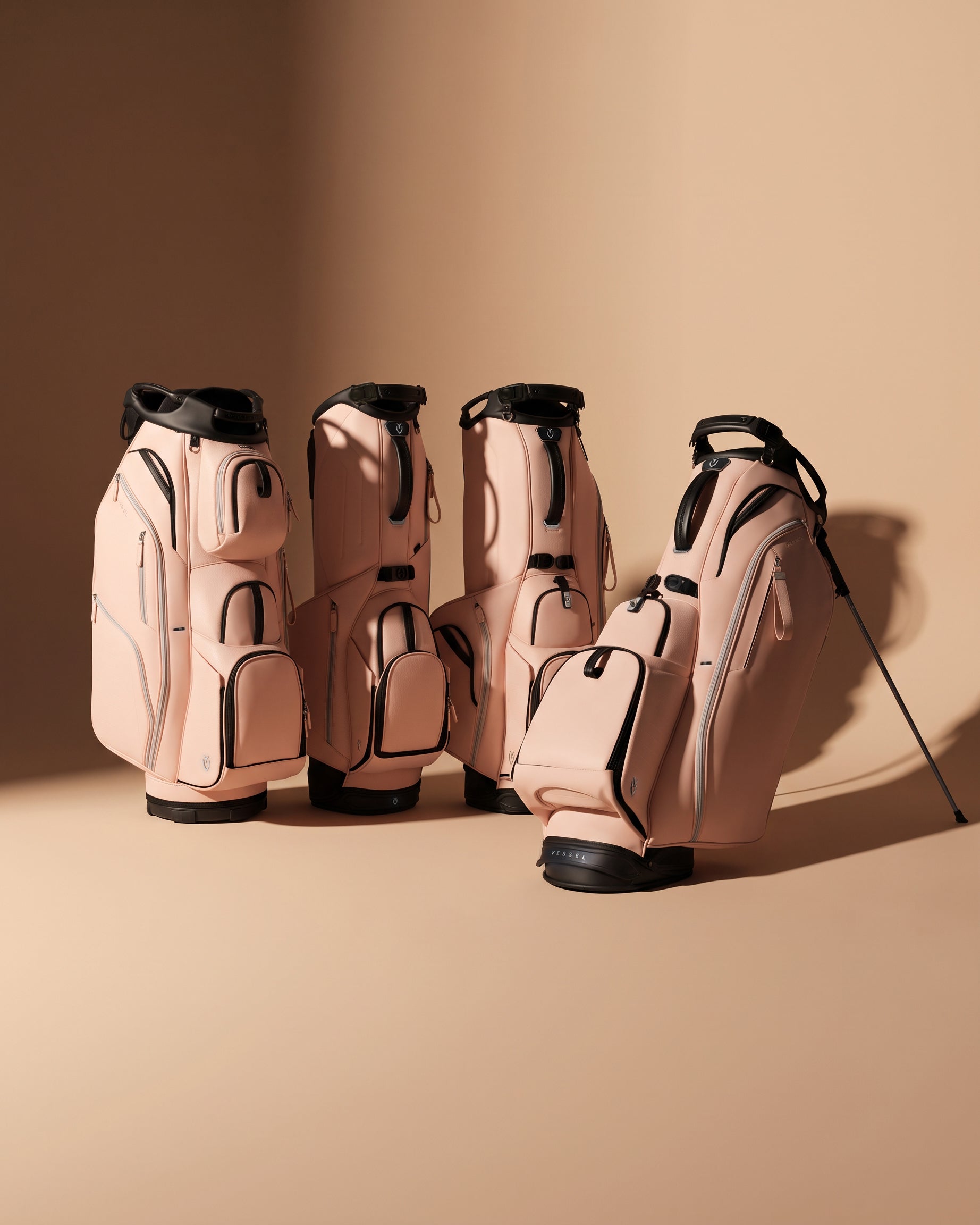
Easily. That's the whole point. Five clubs plus a Sunday or pencil bag 2 to 3 pounds empty, puts you under 20 pounds packed, versus 25 to 35 for a stuffed 14-club setup. Get a double-strap system; single straps wreck your shoulder by hole 12. Skip the tour bag, which starts at 10 to 15 pounds before clubs. Pack balls, water, a towel. That's it. Your back will thank you.
Conclusion
Your 14-club bag isn't helping you. It's giving you 14 ways to second-guess yourself. Strip down to five, learn exactly how far each one flies, and stop trying to hit shots you can't hit. Double bogeys are what's keeping you in the 90s, not your lack of a 4-iron. Play two rounds with these five clubs. Track your stats. If you don't shoot lower, you weren't going to break 90 anyway.


