






A proper golf stance starts with your feet shoulder-width apart, weight on the balls of your feet, and a slight hip hinge, not a slouch from your waist. Your knees stay flexed, your spine stays straight, and your arms hang naturally below your shoulders. Ball position changes by club: center for short irons, inside your lead heel for driver. Most golfers mess up at least two of these basics, and the fixes below cover every one.
Feet, Knees, and Hips: Build Your Golf Stance
Now that you've got the big image of what a solid stance looks like, let's break it down from the ground up, starting with your feet, knees, and hips.
Feet go shoulder-width apart. Not wider, not narrower. Too wide kills your rotation. Too close and you're wobbling around. Keep your weight on the balls of your feet and align them parallel to your target line. Point your front foot slightly toward the target while keeping your back foot mostly straight for optimal balance and power.
Knees: slightly bent. That's it. Don't squat like you're a baseball catcher, and don't lock them straight. A slight flex lowers your center of gravity and lets you actually use ground force. When you look at the top PGA Tour players, you'll notice they all share this same consistent, moderate knee flex at address.
Now, your hips. Push them back a couple inches, hinge from the hips, not your back. Rounding your spine is a guaranteed path to inconsistent contact. Keep that lower back straight.
Golf Stance Ball Position for Every Club
Once you've nailed your feet, knees, and hips, ball position becomes the next thing that'll make or break your contact. Here's a simple rule to remember. Short irons and wedges go center or slightly back. Mid-irons stay centered. Long irons shift about two inches inside your lead heel. The driver sits just inside that front heel.
Why? Because each club needs a different strike angle. Your wedges need a downward hit for backspin. Your driver needs to catch the ball on the upswing for distance. Mess this up, and you're fighting physics. Accurate ball position directly impacts your distance, accuracy, and trajectory, so even subtle misplacements compound into bigger problems down the line. An easy way to check your center starting point is to lay a club across your feet at right angles to the ball-to-target line, confirming the baseline before making any progressive shifts.
The easiest measurement trick: place one clubhead length between the ball and your lead foot for irons through fairway woods. Stance width does the rest of the work, wider for longer clubs, narrower for wedges. Stop guessing. Start measuring.
Driver vs. Iron vs. Putter Golf Stance
Strip away all the overcomplicated instruction, and here's the truth: your driver, iron, and putter each demand a fundamentally different stance because they're doing fundamentally different jobs.
Your driver stance goes wider than your shoulders, ball inside your lead heel, weight 55/45 on your trail side, spine tilted back. You're launching up through the ball. That noticeable upper-body tilt at address is what sets up the upward angle of attack you need to maximize distance off the tee. Because the driver sits at a lower angle than your irons, it naturally requires a more horizontal swing that rotates around the body rather than chopping down steeply.
Your iron stance narrows to shoulder-width, ball centered, weight 55/45, favoring your lead side, spine stacked vertically. You're hitting down on it.
Your putter stance shrinks even narrower, ball dead center, weight perfectly balanced, eyes directly over the ball line. You're rocking a pendulum, not generating power.
Three clubs, three completely different setups. Mess this up, and no swing tip on earth saves you.

How to Check Your Golf Stance at Home
Now that you know the stance mistakes robbing you of distance, you need a way to actually spot them, and you don't need a golf pro or a fancy simulator to do it. Grab your smartphone and an alignment stick (or a spare club).
Lay the stick on the ground along your target line. Set up normally, then record yourself from behind and down the line. You'll immediately see if your feet, hips, and shoulders are actually parallel, spoiler, they probably aren't.
Next, check posture in a mirror. Place a club against your belly and chest, hinge from your hips, flex your knees slightly, and let your arms hang. Eyes should look straight down at the ball. Practice with different clubs weekly. Muscle memory doesn't build itself.
Frequently Asked Questions
How Does Foot Stance Change When Hitting From an Uphill or Downhill Lie?
On an uphill lie, you're shifting weight toward your back foot and playing the ball slightly back in your stance, with your shoulders parallel to the slope, so you're not fighting gravity. Downhill's the opposite: weight goes to your front foot, and you'll want to flare that downhill foot about 45 degrees while narrowing your stance for stability. Honestly, most people skip that flare and wonder why they're stumbling through impact.
Should Your Golf Stance Differ When Playing in Strong Wind Conditions?
Yes, absolutely. Widen your stance a few inches, it's your anchor against gusts trying to knock you off balance. Move the ball 1-3 inches back in your stance to keep the flight low, especially into headwinds. Keep your weight centered; don't sway. Doesn't matter if it's a crosswind or tailwind, plant your feet and commit. Wind punishes instability, so a solid base isn't optional, it's everything.
How Do Physical Limitations Like Back Pain Affect Proper Golf Stance Adjustments?
Back pain changes everything about your stance. If your hips or thoracic spine won't rotate properly, your lumbar spine picks up the slack, and it's only designed for 12-15 degrees of rotation. That's a disaster waiting to happen. Widen your stance slightly, soften your knees, and hinge from the hips, not your waist. Strengthen your core and glutes, because weak abs and tight hip flexors create Lower Crossed Syndrome, which absolutely wrecks your back.
Does Wearing Different Types of Golf Shoes Change Your Optimal Stance?
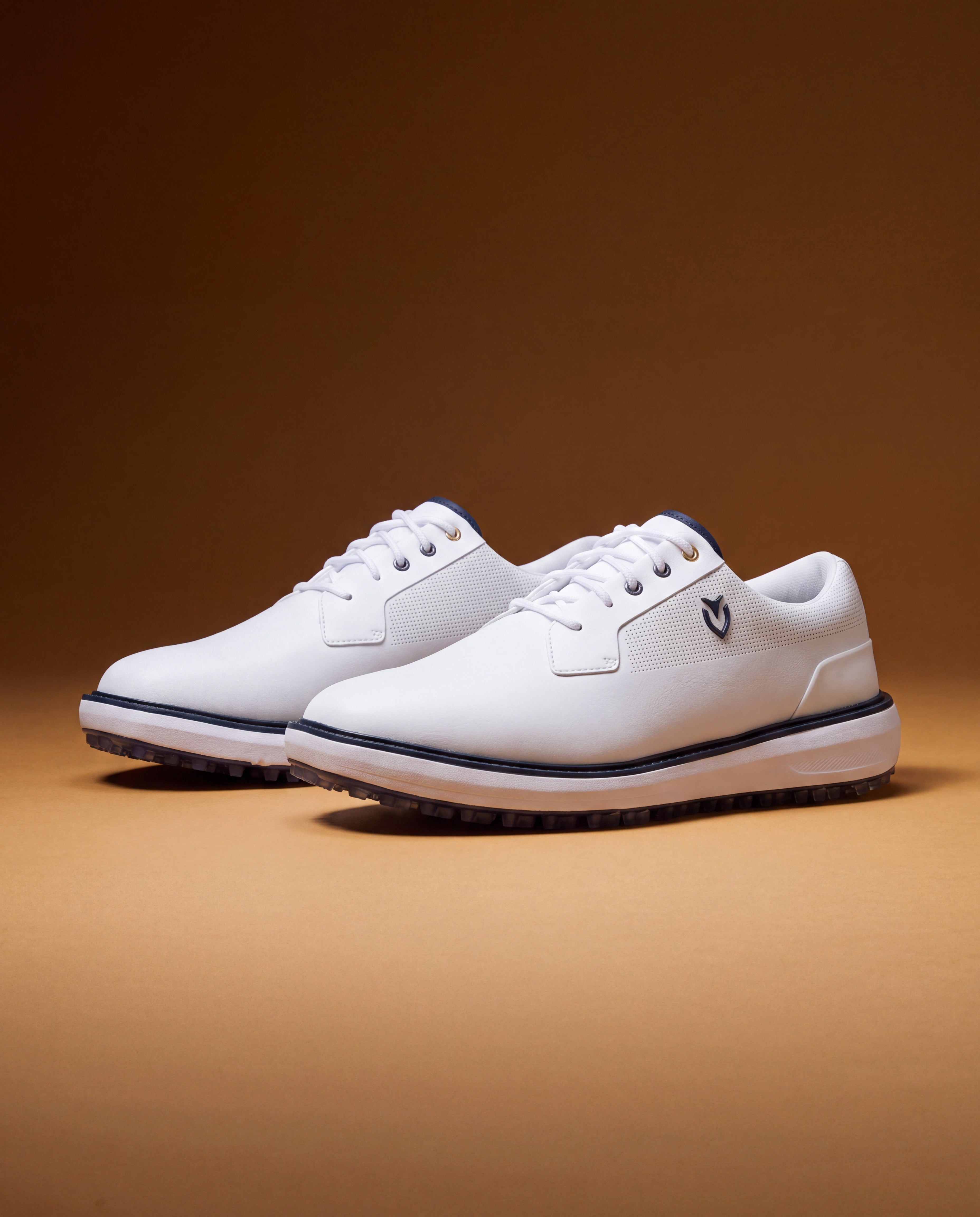
Absolutely, it does. Spiked shoes give you a lower center of gravity and better grip, so you can widen your stance confidently. Spikeless? You'll unconsciously narrow up to avoid slipping. Narrow soft soles actually cause lateral knee slide in your backswing that's your shoe literally wrecking your mechanics. Shoes like Sqairz with a wide, reinforced base let you plant firmly and generate real force. Your stance starts from the ground up, period.
How Long Does It Typically Take a Beginner to Develop a Consistent Stance?
You're looking at roughly 3-6 months of regular practice before your stance feels natural instead of forced. Weekly lessons during those initial three months build the fundamentals grip, alignment, weight distribution then repetition does the heavy lifting. By six months, muscle memory kicks in and you'll stop consciously thinking about foot placement. It's not glamorous work, but skipping it guarantees inconsistent ball striking for years.
Conclusion
Look, your golf stance isn't complicated but it's non-negotiable. Get your feet shoulder-width, ball position dialed for each club, and knees flexed like an athlete, not a statue. That's it. No magic trick, no $200 training gadget needed. Film yourself from behind with your phone, check it against what you've learned here, and actually practice it. You'll hit better shots this week. Guaranteed.


